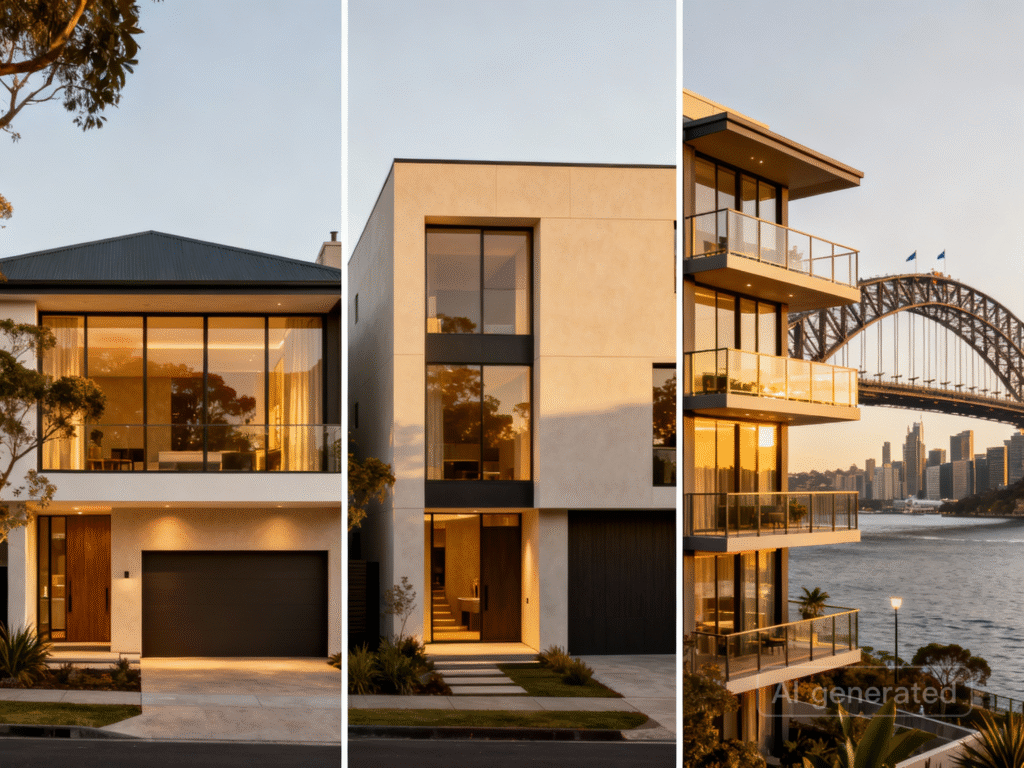
In the last few posts, I’ve talked about all the various factors and non-negotiables an Australian investor—whether seasoned or rookie—needs to consider. However, the foundation of every portfolio starts with a clear answer to a single question: What can you actually buy? Let’s start with the absolute basic list: what kind of residential investments are available to you.
Think of this as your essential guide to the different assets you can acquire and the cold, hard cash involved in buying and holding them.
1. What Can You Actually Buy? Your Australian Residential Asset Toolkit
When you’re starting out, there are four main types of residential properties you’ll encounter. Each one is a different tool for a different job in your portfolio:
The House (Freestanding/Detached Dwelling)
This is the classic Australian dream, and it’s usually the champion for capital growth. Why? Because when you buy a house, you own the land beneath it outright, and it’s the land component that tends to appreciate the fastest over time.
- The Pro: The biggest potential for long-term growth. You have maximum control—you can renovate, add a granny flat, or even potentially subdivide (subject to council approval) to manufacture growth.
- The Catch: They are typically the most expensive to buy upfront. Crucially, they have the highest maintenance burden. You are personally responsible for the roof, the fence, the garden, and every single thing inside and out. They often offer a lower rental yield compared to other types.
The Apartment or Unit
These are self-contained dwellings within a larger building, usually sharing walls and common areas. If the house is the capital growth champion, the apartment is often the cash flow (yield) champion.
- The Pro: They have a lower price point, making it easier to get into the market or diversify. They often offer higher rental yields and are popular in city locations. Maintenance of common areas is also easier for you, the owner.
- The Catch: You don’t own the land outright; it’s shared among all owners. This limits capital growth potential compared to a house. You also have limited control over the building’s exterior or major changes. You are subject to Strata or Body Corporate fees, which we will cover in the costs section.
The Townhouse or Villa
This is often the perfect middle ground. A townhouse is usually multi-storied and shares one or two walls with neighbours, while a villa is typically single-story.
- The Pro: They feel more like a house, often with a small private courtyard, but they have less maintenance than a full standalone house. They offer a good balance of growth potential and decent rental returns.
- The Catch: Like an apartment, they usually involve Strata or Body Corporate fees because of shared driveways, gardens, or common property elements. Your control is restricted by the Body Corporate rules.
Vacant Land
While not a dwelling, you can certainly invest in residential land. This is purely a long-term play, often with the intent to build later or simply hold for future land value appreciation.
- The Pro: Very low holding costs, especially maintenance, as there is no dwelling to look after.
- The Catch: It generates no rental income until you build on it, meaning you must cover all costs out-of-pocket, which is a significant factor in your budget.
2. The Hit List: Costs Incurred at the Time of Purchase (Upfront)
Beyond your deposit, there are several non-negotiable costs that you need to budget for. They can easily add 5–7% (or more) to the purchase price, and you need to have this cash ready by settlement day.
- Deposit: Usually 10% to 20% of the purchase price. This is the big one.
- Stamp Duty (or Transfer Duty): This is typically the single biggest upfront cost besides the deposit. It is a tax levied by the state or territory government on the transaction. It is a significant figure, and you’ll need to use a state-specific calculator to find the exact amount, as it varies wildly based on price, state, and whether you are a first-time buyer or an investor. It’s always a good idea to be aware of how much you would need to spend on this line item. There are many online calculators like this one from CommBank to get an estimate.
- Lenders Mortgage Insurance (LMI): If you borrow more than 80% of the property’s value (i.e., your deposit is less than 20%), the bank will require you to pay LMI. This is a one-off fee that protects the lender—not you—in case you default. It can be a substantial cost, so aiming for a 20% deposit is often the goal to avoid it.
- Legal / Conveyancing Fees: You need a licensed conveyancer or solicitor to handle the legal transfer of the property title, review the contract, and coordinate the payment of Stamp Duty. Budgeting around $1500 to $2,500 for this is a safe estimate, depending on the complexity.
- Building & Pest Inspections: If you’re buying an existing house, this is non-negotiable. You need to ensure the structure is sound and there are no termite issues. It’s a small investment that can save you tens of thousands later.
- Government Fees: These are minor fees to register the mortgage and the transfer of the property title with the government’s Land Titles Office.
3. The Reality Check: Costs that Hit You Month-on-Month (Ongoing)
Once you own the property, the stream of recurring expenses begins. You must factor these into your cash flow analysis—this is the true test of your budget.
- Mortgage Repayments: The most obvious cost. You’ll be paying Principal and Interest (P&I) to pay down the debt and the interest, or potentially just Interest Only (IO) as an investment strategy to free up cash flow (though IO terms are limited).
- Council Rates: A quarterly property tax paid to your local council to fund services like rubbish collection, libraries, and local infrastructure.
- Strata / Body Corporate Fees (If Applicable): If you buy a unit, apartment, or townhouse, you will pay these fees, often quarterly. They cover the maintenance, insurance, and management of all the common areas. If the building has luxury facilities like a pool or gym, expect these fees to be significantly higher.
- Land Tax: This is an annual state tax that is only charged on land you own that is not your primary residence. The amount is based on the value of the land, and it usually only applies if your total land holdings exceed a certain threshold set by the state. Try using this calculator to get a better understanding of what you might be paying if your property is in NSW.
- Insurance: At minimum, you need Building Insurance (required by your lender). As an investor, you should also have Landlord Insurance. This protects you against unique risks like damage caused by tenants or loss of rental income if the tenant defaults. This is an important factor impacting yield, especially in flood prone areas. Last few years have seen a number of 1 in 100 year weather events, so keeping in mind flood zones and severe weather zones which would impact your insurance is a must-do before you finalise your purchase.
- Maintenance and Repairs: This is the one many investors underestimate. Whether it’s a leaky tap or a broken hot water system, you are the landlord and responsible for major repairs. You must budget a percentage of your rental income specifically for this.
- Property Management Fees: If you hire a property manager (highly recommended for your time), they will charge a percentage of the gross weekly rent (typically 6-10%) plus a leasing fee when a new tenant moves in. This is deducted from your rental income monthly.
4. Mentor Insights: Strategic Focus Points
Let’s also look at two critical topics currently dominating high-level property discussions. These discussions move beyond the basics of what you buy and focus on how you execute a high-performing strategy in the current Australian market.
Topic 1: Cash Flow is the New Capital Growth
While capital growth—the appreciation in the property’s value—is the ultimate wealth builder, your cash flow (the net profit or loss after all expenses) is what determines your longevity and your ability to scale.
- In a high-interest rate environment, the most vital focus is on securing properties that are positively geared or as close to neutral as possible.
- Why? Because your borrowing capacity is directly tied to your existing properties’ cash flow. A portfolio of properties losing a little money each week will quickly throttle your ability to secure the next loan, effectively ending your growth plans.
- The discussion now centers on finding areas with high rental yield (usually apartments/units or regional houses) to ensure you have the financial resilience and lending capacity to keep buying when others can’t.
Topic 2: Manufacturing Value is Superior to Waiting for it
Relying purely on passive market movements (just waiting for the suburb to grow) is a slow and high-risk strategy. The smarter focus is on manufacturing capital growth.
- This means selecting properties that have potential to add value immediately after settlement. This could be through a minor renovation to uplift the rental return, adding a granny flat (if zoning permits) to increase income, or subdivision/development.
- When you manufacture $50,000 in equity through a smart, $20,000 cosmetic renovation, that value is instant and bankable. This accelerated equity is what allows you to refinance and pull out a deposit for your next purchase much faster than waiting three to five years for the passive market to do the same.
Starting with this clear list of assets and associated costs puts you miles ahead of most beginners. Now you can use these figures and this strategic mindset to build a reliable cash flow forecast for your first or next investment. Good luck!